Not every dream is from God.
That sounds obvious, but it matters because the opposite mistake is easy to make: once you begin taking dreams seriously, you can start taking all of them seriously.
I have done that.
What helped me was to stop asking, “What does this symbol mean?” and start with a more basic question:
What kind of dream am I dealing with?
There are three questions I return to.
1. Does it agree with Scripture?
If I believe God may have spoken to me, Scripture is the first place I test it.
A dream does not get a special exemption because it felt vivid, frightening or unusually important.
God does not need me to protect a dream from examination.
If the meaning I am giving it contradicts what Scripture says about God, about sin, about truth, or about how I am to treat another person, I have a problem with my interpretation.
That test has saved me from taking my own fear too seriously more than once.
2. Does it know something about me?
This is one reason I do not use universal dream dictionaries.
The same image can mean two completely different things in two different lives.
A dog can mean safety to one person and fear to another. A house can carry memories that no symbol book could know. A place from childhood may matter because of what happened there, not because houses or streets have a fixed spiritual definition.
When I am trying to understand a dream, I start with my own associations.
What did that person, object or place mean to me before the dream happened?
That question is often more useful than asking what it is “supposed” to mean.
3. What is the dream doing?
I pay attention to the effect of the dream, but I do not treat emotion as proof.
A frightening dream is not automatically a warning from God. A peaceful dream is not automatically from Him either.
I ask what the dream seems to be doing.
Is it exposing something I have refused to look at?
Is it bringing a situation back to my attention?
Is it correcting an assumption?
Is it warning me about something I can actually respond to?
Or is it simply replaying fear, stress or what occupied my mind before sleep?
The point is not to make the dream important.
The point is to understand whether there is anything there that needs a response.
God can speak to people who are not looking for Him
The Bible makes this difficult to ignore.
Pharaoh dreamed before Joseph interpreted the dream for him.
Nebuchadnezzar dreamed and needed Daniel.
Pilate’s wife sent a warning to her husband because of what she had suffered in a dream.
None of those stories depends on the dreamer already being spiritually mature or even seeking God correctly.
That matters to me because it shifts the question.
The question is not, “Am I spiritual enough to receive a dream from God?”
The question is what I do with something that may have been given to me.
Write it down
This is much less dramatic than interpretation, but it is one of the most useful habits I know.
Write the dream down before the day gets hold of you.
Do not improve it.
Do not make it more coherent.
Write what happened, who was there, what you felt, what seemed strange, and what you remember most clearly.
A few hours later, your memory will already have edited parts of it.
You can interpret later.
First, preserve what actually happened.
Then seek the meaning
I try not to begin with interpretation.
First the dream.
Then the record.
Then the questions.
Then, if there is something to understand, I begin looking for meaning.
That order matters because once I decide too quickly what a dream “must” mean, I start bending the details around my conclusion.
Sometimes understanding comes quickly.
Sometimes it does not.
I have dreams I understood much later than I wanted to.
I would rather leave a dream unanswered than force an answer because uncertainty makes me uncomfortable.
God speaks in one way, and in two, though man does not perceive it.
So how do you know if a dream is from God?
Sometimes you do not know immediately.
That is an answer I wish I had accepted sooner.
You test it.
You compare what you believe you heard with Scripture.
You pay attention to the personal language of the dream.
You look at what it is asking you to notice or do.
And if you still do not know, you can wait.
Discernment does not require you to pretend certainty.
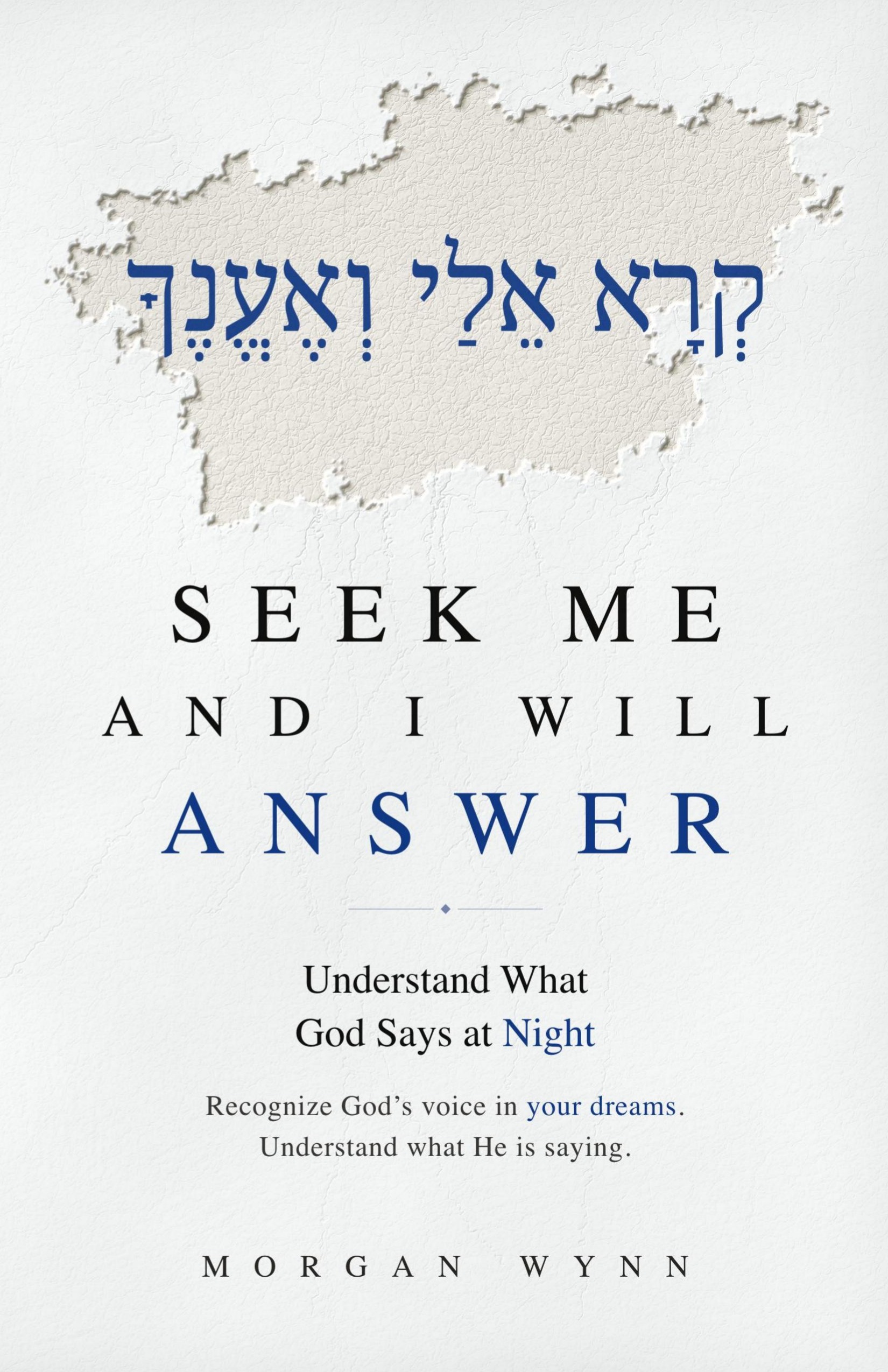
Learn the whole method
If this is the question you are trying to work through, Seek Me and I Will Answer goes much further into how I test dreams, how I think about symbols, warnings, correction, recurring dreams, and the ones I still cannot understand.
About Seek Me and I Will Answer →Get the book on Amazon ↗